
Selected Visual Work
ON::View Artist Residency
Interdisciplinary Art • Social Practice • Conceptual Portraiture • Moving Image • Sound • Writing • Facilitated Experience
My practice explores the unfinished middle of transition: the space between what no longer fits and what has not yet fully taken form.
These selected works trace how I have used portraiture, writing, sound, moving image, creative direction, curation, conversation and participatory experience to examine identity, inherited roles, self-authorship, wellbeing and the stories we learn about how a life is supposed to unfold.
Across the work, slowing down is not incidental to the process. It is part of the method. Making, listening, moving, witnessing, writing and spending time in nature have each offered ways to interrupt urgency long enough to notice what an experience is asking of me before rushing toward an answer.
The projects move between autobiographical and collective inquiry. Some begin with my own body and story. Others invite collaborators or participants to interpret, question and contribute. Together, they reflect the artistic language I would continue developing through ON::View: creating experiences in which transition can be seen, felt, heard and examined before we know how the story ends.
My Year of Kintsugi: The 4 Personas
Nik + Khalia
Conceptual Portraiture •Autobiographical Writing • Artistic Direction • Visual Storytelling
Artist •Model • Writer • Creative Director: Marisha Dixon
Photography: Elisa Valdez
My Year of Kintsugi began during a mental health sabbatical and period of self-inquiry in which I used autobiographical writing and boudoir-informed conceptual portraiture to examine identities I had learned to perform in order to remain successful, acceptable, useful, protected or loved.
I chose boudoir deliberately. Historically, the boudoir referred to an intimate, private room, a place apart from more public presentation. I was interested in reversing that relationship by bringing what I often kept private into view.
The photography made exposure both literal and figurative. Working with my body, wardrobe, gesture, environment and the camera asked me to practice being seen while also becoming more willing to see myself truthfully, including my desires, contradictions, shame, needs, sensuality, ambitions and patterns of self-abandonment.
Through The 4 Personas, Khalia, Hunter, Nik, and Mari, I gave different parts of myself enough distance to examine, question and eventually reintegrate them. I conceived and artistically directed each portrait, selecting the setting, props, wardrobe, visual symbolism and collaborators around the psychological story being explored.
That relationship between baring the body and baring the self later informed the language of Please, BARE With Me: radical vulnerability as a practice of telling the truth before it has been polished into an easier story.
For ON::View, I selected Nik and Khalia because the images speak directly to two recurring territories I want to explore within The Place Between No Longer and Not Yet, the definitions of success and the roles we learn to perform.

Image 01 — Nik: The Educator
Nik sits on a television, a medium that has helped shape cultural ideas about professionalism, achievement, adulthood and what a successful life should look like.
The television operates here as both critique and possibility. Media can reinforce scripts about what we should pursue and who we should become, but it can also be reclaimed to introduce different stories. The image informed ‘the evolution will be televised’ which is an idea I continue to explore as an opportunity to use media, art and my background in education to make alternative ways of living and contributing visible.
Nature surrounds the image as another kind of teacher. Unlike many social systems, the natural world does not demand that transition happen on a human timetable. Cycles change without apology. That relationship with land has become increasingly important to how I understand pace, transition and my own movement from education as a profession toward education as one element of a broader interdisciplinary artistic practice.
ON::View connection:What makes a life successful, and who taught us the answer?

Image 02 — Khalia: The Divine Feminine
Khalia examines roles associated with femininity, womanhood, sexuality, spirituality, desirability and the body.
Vinyl records appear within the portrait as another form of cultural transmission. Music can communicate expectations about gender, sexuality and desirability, but it can also become a way to access memory, emotion, movement, pleasure and release.
Khalia emerged from my examination of the ways religious, familial and cultural messages influenced my relationship to femininity and self-expression. My existing project describes her journey from shame and suppression toward greater bodily and emotional self-acceptance.
For me, music increasingly functions less as background than as an embodied practice. Music is something I often use to acknowledge what I’m feeling, move energy through the body or intentionally call forward a different emotional state.
ON::View connection:Which roles have we inherited, and which ones are still ours to choose?
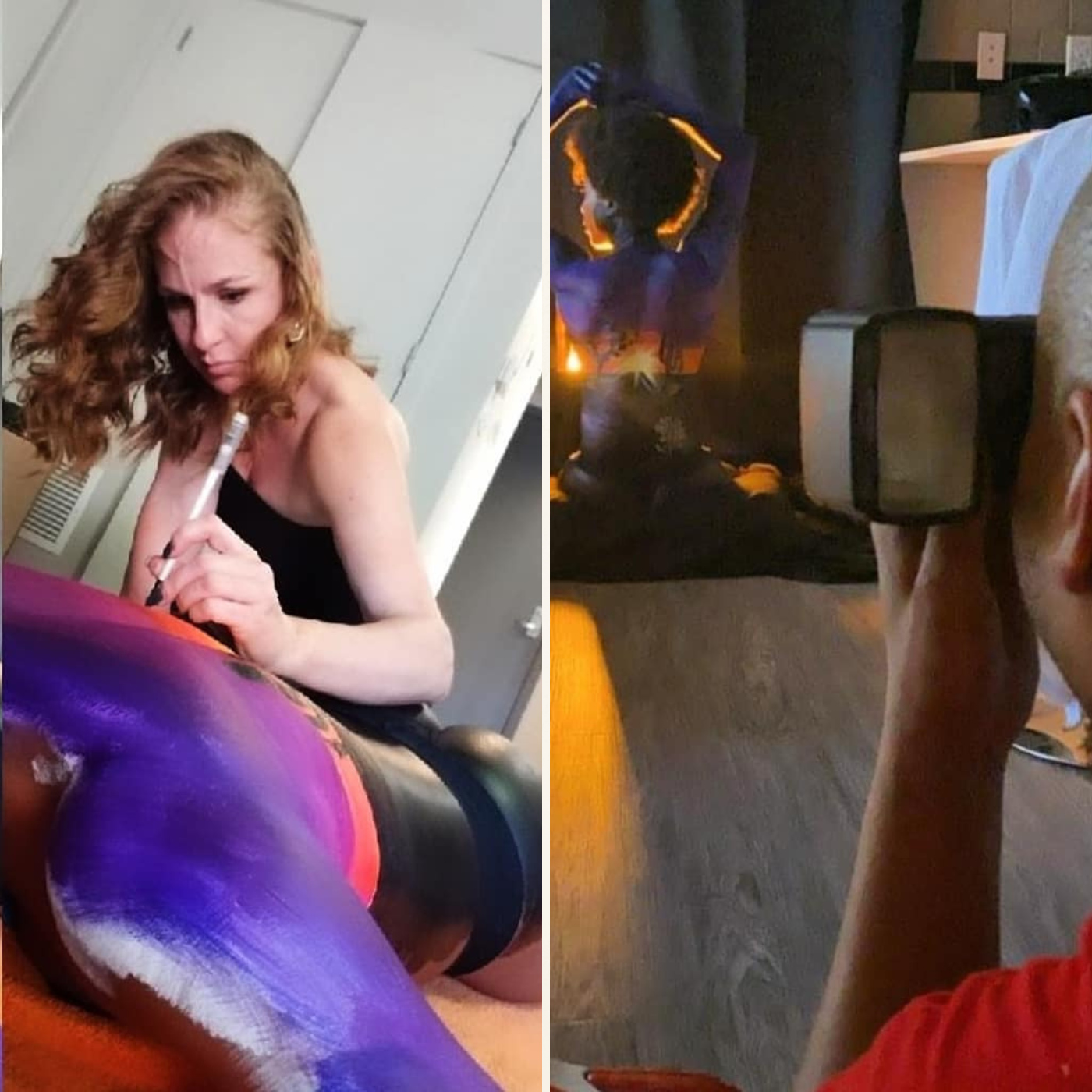
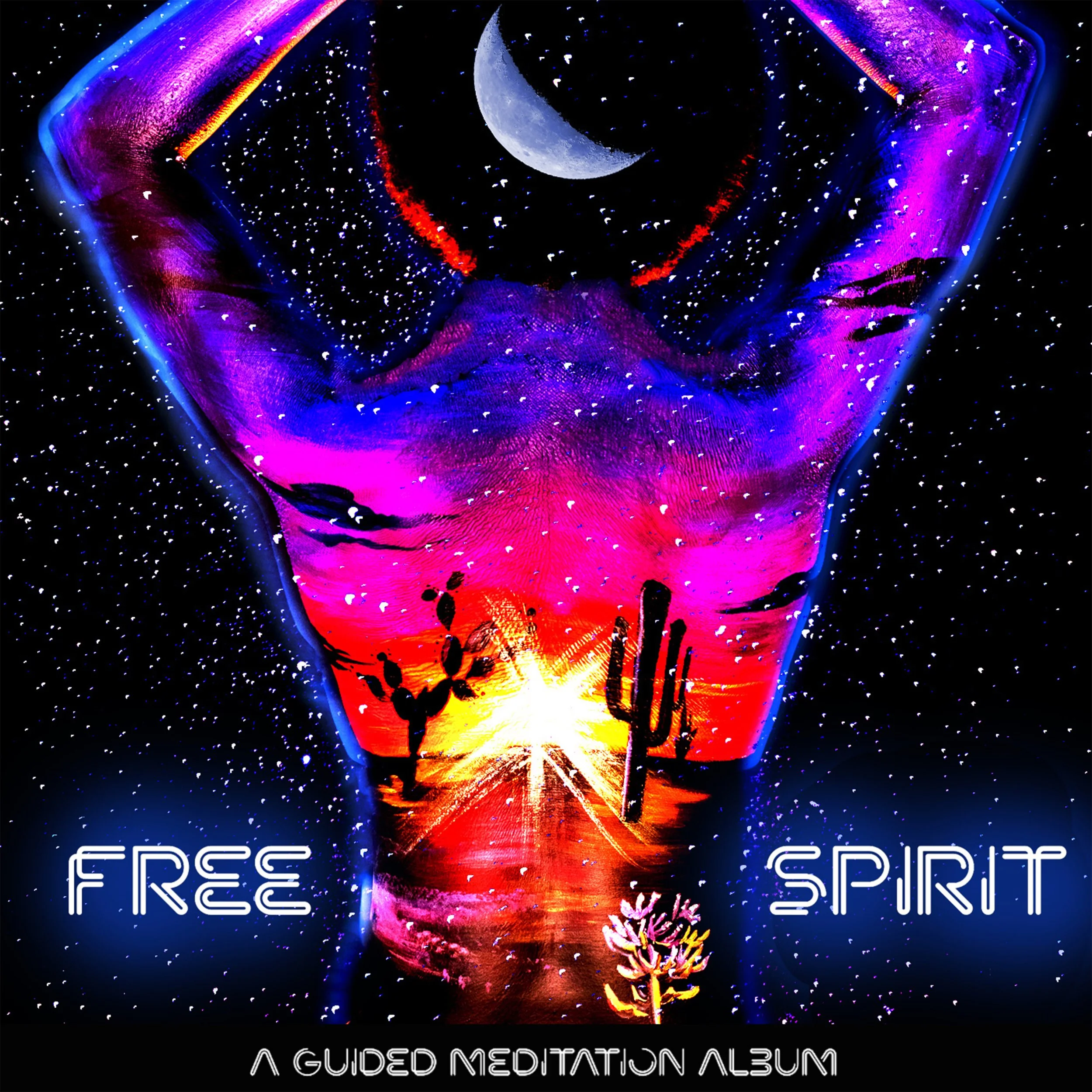
Image 05 — Album Visual Concept
Digital composition developed as an early visual concept for the Free Spirit album.
Placed after the two process images, the work demonstrates how a collaborative physical experience can be translated into another medium:
body → image → digital composition → sound world.
The sequence is important. It shows that my practice often begins by gathering the right people and modalities around a human question and allowing the final form to emerge through collaboration.
Free Spirit: Returning Home to Harmony
Sound • Spoken Word • Body Art • Conceptual Portraiture • Guided Reflection • Collaborative Practice
Writer • Narrator • Creative Director: Marisha Dixon
Sound Collaboration: Tahif Attiek + Trevor Coulter
Body Painting: Cassandra Hansen
Photography / Documentation: Daniel Robinson
Free Spirit: Returning Home to Harmony is an evolving sonic and multimedia body of work exploring what it means to hear and trust one's internal rhythm after years of external demand.
The project began through writing, spoken voice and guided meditation and has expanded through collaboration with composers, sound practitioners, healers and visual artists.
ON::View connection: Free Spirit demonstrates how I use collaboration, sound, the body and visual interpretation to explore transition as a change in rhythm, not only a change in identity. At ON::View, that inquiry expands into the pace of the residency itself with periods of conversation and making are intentionally balanced with listening, walking, reflection and rest so that the work can respond to what emerges rather than being rushed toward a predetermined conclusion.
Image 03 — Body Painting / Making
Documentation of body paint being applied by a collaborating visual artist.
This image makes collaboration visible. Rather than treating another artist as someone hired only to execute a technical task, I am interested in what happens when another person's craft, perspective and artistic language enter the work.
Image 04 — Embodied Portrait / Documentation
Documentation of the painted body being photographed.
The body becomes another surface for exploring internal transition, and not as something explained intellectually, but as something experienced through texture, image, gesture and presence.
Bloody Mari
Moving Image • Writing • Movement • Sound • Performance • Visual Direction
Writer • Director • Creative Lead: Marisha Dixon
Cinematography: Haili Copeland
Pianist/Composer: Carly Bates
Performers: Hannah Victoria, Reigna, Zakiya Johnson
Bloody Mari is a moving image adaptation developed from autobiographical writing in Crumbling Walls / How I Built My Temple. The work translates written reflection into movement, performance, original music and visual storytelling, asking what happens when an earlier story is revisited through the body from another stage of life.
The project was also one of my earliest intentionally multidisciplinary collaborative works. I brought together women at different ages and stages of life whose creative practices included cinematography, musical composition and different forms of dance and movement. Holding the conceptual throughline required not only directing the finished image, but identifying the right collaborators, communicating the emotional intention of the work across disciplines, coordinating schedules and making room for each person’s creative language to influence the final piece.
Rather than allowing the original text to remain fixed on the page, the collaboration became another act of reinterpretation: one woman’s written experience could be encountered through several women’s bodies, instruments, movement vocabularies and perspectives.
ON::View connection: Bloody Mari demonstrates both the thematic and collaborative methods I would extend in Savannah, using different artistic disciplines and life perspectives to investigate how transition is experienced rather than asking one medium to explain it alone.
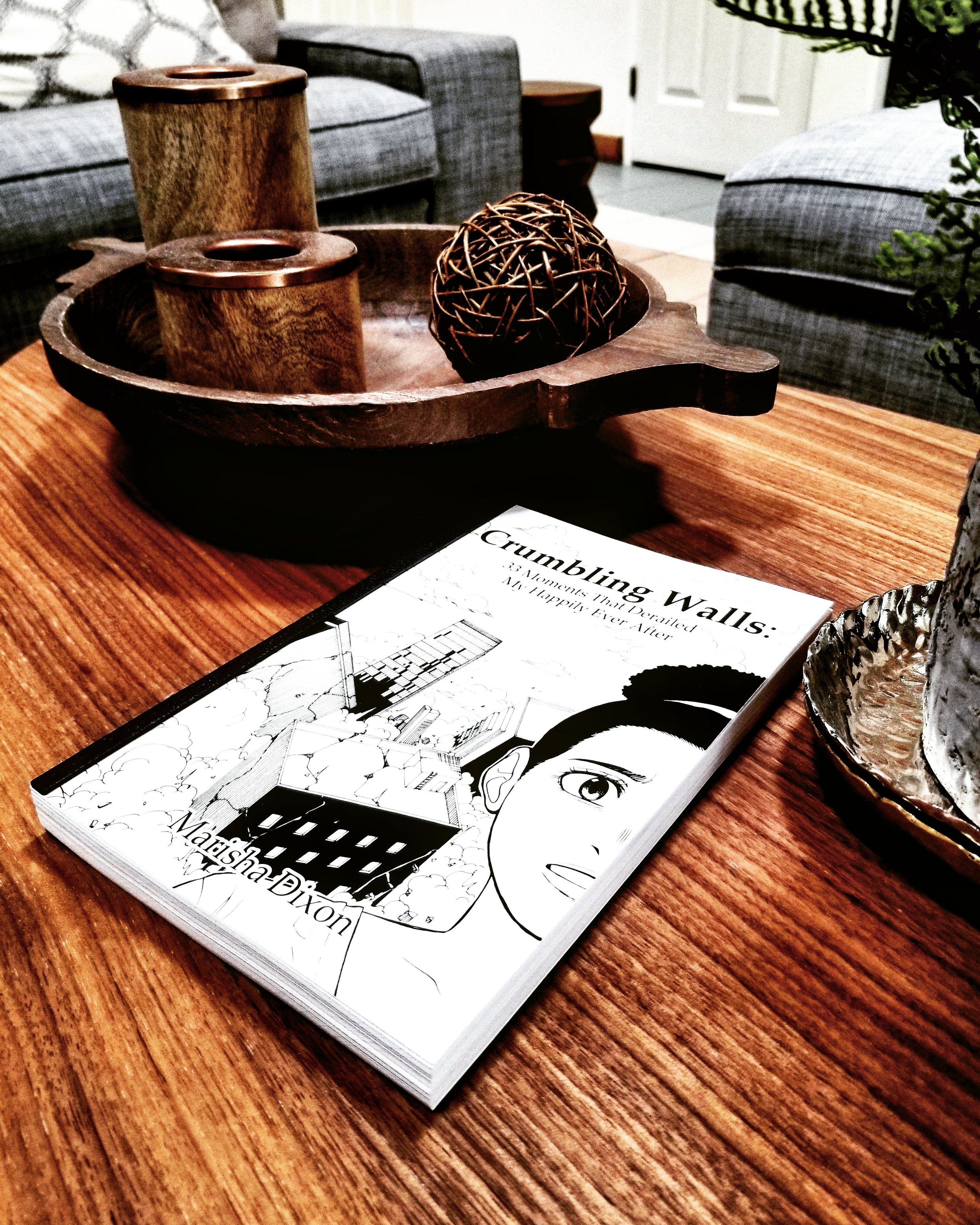
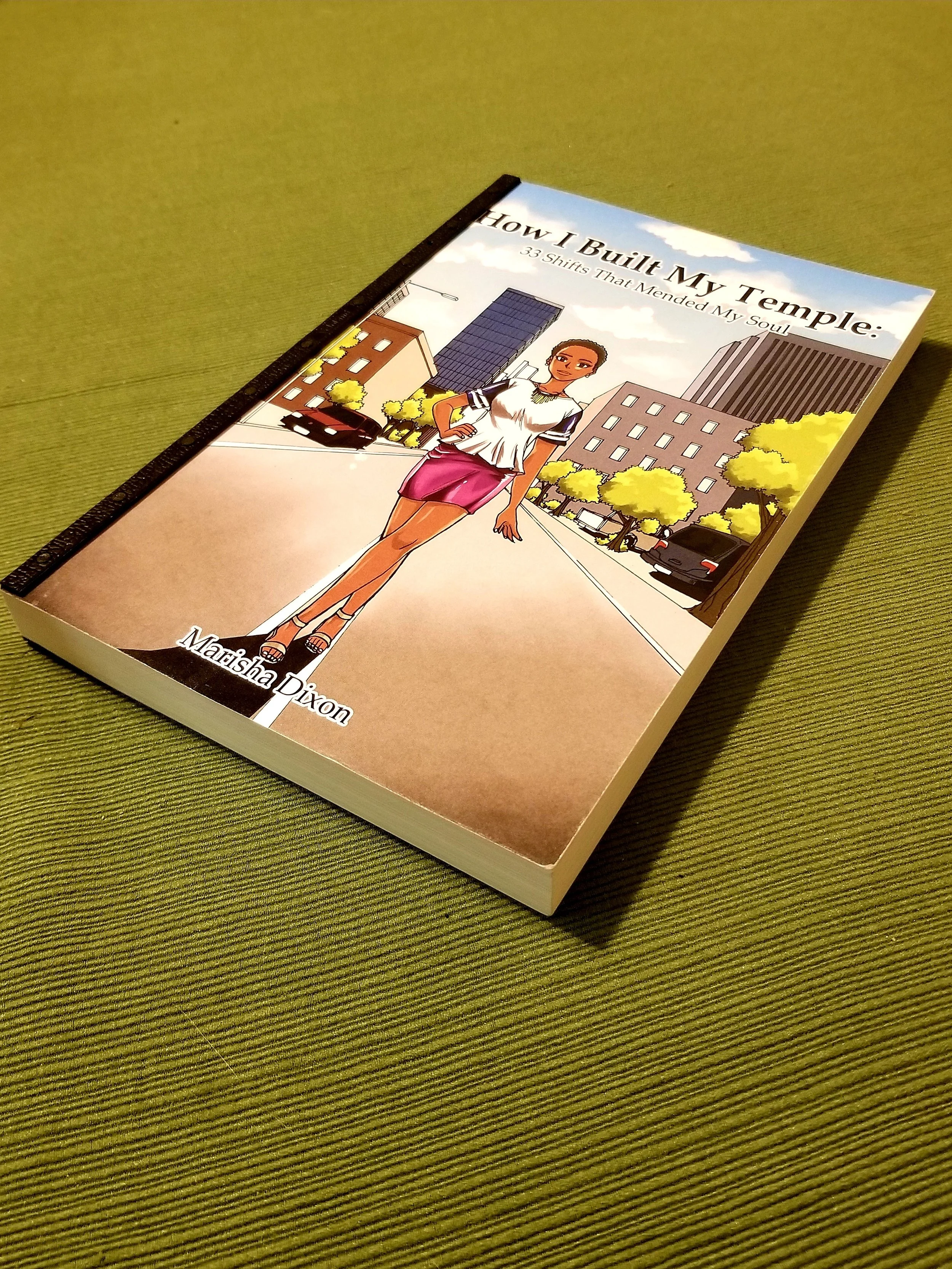
Image 08 — How I Built My Temple
The physical reverse: not an erasure of what happened, but another way of understanding what those experiences made possible.
ON::View connection: Can the unfinished middle change depending upon the perspective from which we encounter it?
Crumbling Walls /
How I Built My Temple
Autobiographical Writing • Book Art/Literary Object • Reflective Practice
Author • Concept Curator : Marisha Dixon
Illustrator: Judy Castillo
Double-sided paperback • 6 × 9 in. • 297 pages
This double-sided book places two interpretations of a life inside one physical object.
Crumbling Walls: 33 Moments That Derailed My Happily Ever After examines experiences I once understood through disappointment, disruption and the collapse of an imagined life trajectory. Flip the book and How I Built My Temple: 33 Shifts That Mended My Soul revisits those experiences through reflection, learning and a more self-authored understanding of what happened.
The form matters. The reader physically turns the object to encounter another perspective. That gesture anticipates a question running throughout my current practice: How much of what we call reality is also interpretation and what becomes possible when we learn to look again?
The work did not remain only a literary object. Around its release, I began translating the book into facilitated reflection experiences for organizational and public communities. Through writing prompts, cognitive reframing, small-group dialogue and community-circle reflection, participants used the structure of the book as an entry point into examining experiences from their own lives.
Those offerings became early evidence of something that now recurs throughout my practice: one creative work can generate multiple forms of public value without losing its central inquiry. A book can become conversation, writing can become movement, reflection can become facilitated experience, and one person’s story can become an invitation for other people to reconsider their own.
Image 07 — Crumbling Walls
The life as originally experienced and narrated: disruption, expectation and the collapse of an imagined “happily ever after.”
Please, BARE With Me
Documentary Conversation • Street Interviews • Sound • Editorial Portraiture • Participatory Media
Creator • Host • Creative Director: Marisha Dixon
Please, BARE With Me began as a sonic vulnerability practice and is evolving into a multimedia storytelling project using documentary conversation, field interviews, portraiture, audio and participatory experience to explore the identities people perform, the truths they bury and what happens when they allow themselves to be witnessed before everything has been resolved.
The street interview format moves the inquiry outside of my own story. People who might never enter a formal workshop, gallery conversation or wellness program can encounter a human question in public space and decide how deeply they want to enter it.
The project also informs my understanding of participation as artistic material. A person's response is not simply “content.” Their hesitation, language, gesture, interpretation and choice about whether to participate all become part of what the encounter reveals.
ON::View connection:What changes when private questions are given a public place to be spoken and one person's honesty becomes permission for another person's reflection?
Perspectives: Leveraging the Power of Art to Enhance Personal Wellbeing
Curatorial Practice • Participatory Art • Mindful Observation • Photography • Facilitation • Dialogue
Experience Designer • Curator • Facilitator: Marisha Dixon
Client: Teach For America (adapted from my Arizona State course)
Featured Visual Artist: Uğur Gallenkuş
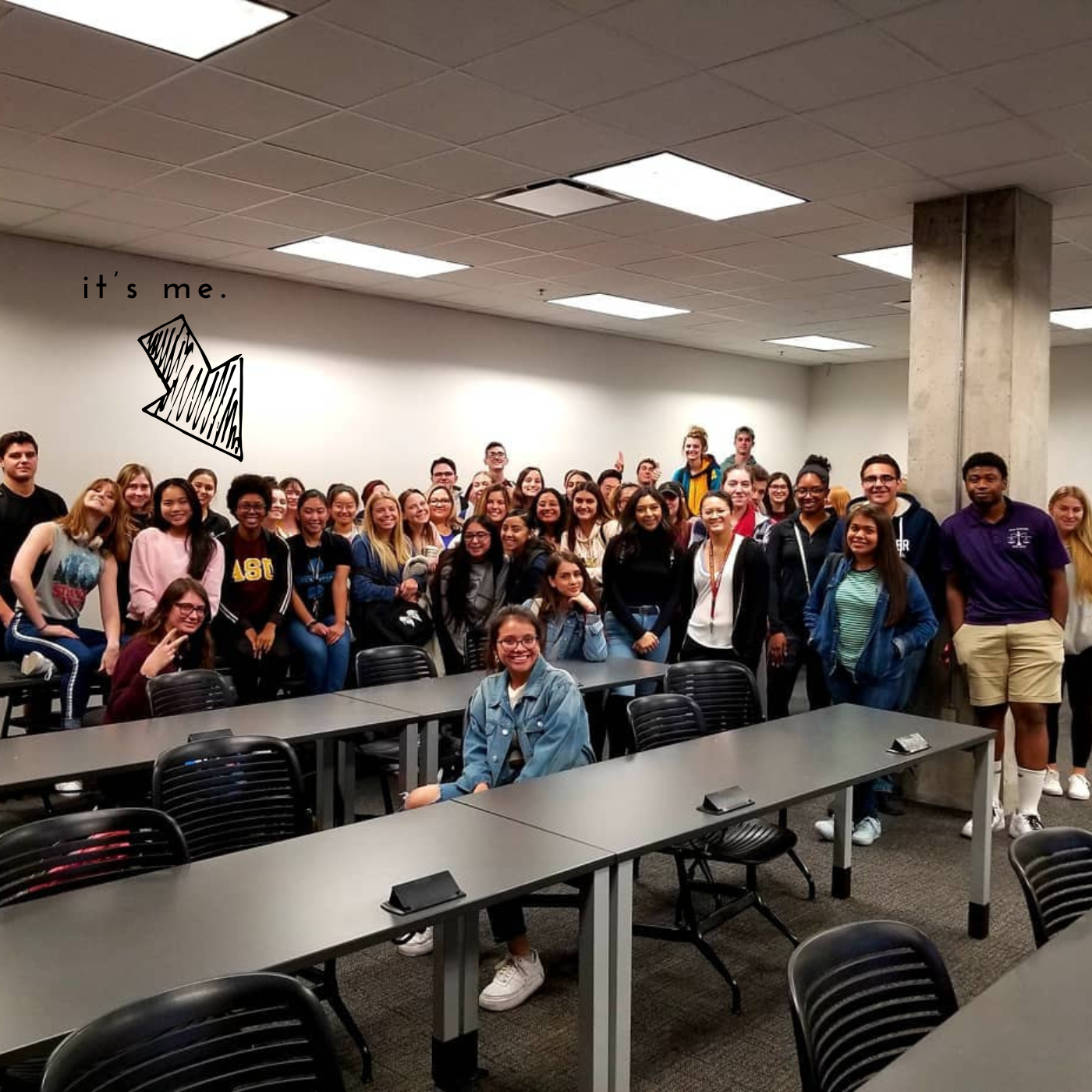
Perspectives was a facilitated art and wellness experience created for social-impact professionals. Rather than using art as decoration or illustrating a predetermined lesson, I curated visual work as a prompt for slowing down, observing and examining how perception shapes emotion, leadership, relationship and the ways we interpret other people's experiences.
The experience incorporated work by Turkish artist Uğur Gallenkuş whose Parallel Universes works juxtapose radically different lived realities, including privilege and deprivation, peace and conflict. His own description of the practice emphasizes using visual contrast to provoke reflection on inequality and human experience.
Participants were invited to look before immediately explaining, notice their emotional and cognitive responses, and use facilitated dialogue to consider what the imagery surfaced personally and collectively.
That slowing down is increasingly important to my current practice.
Creative engagement can interrupt the impulse to immediately solve, defend, retreat or react. Sometimes the first intervention is simply more time with what we are seeing and feeling.
ON::View connection: What if navigating transition begins not with deciding what to do next, but with learning how to remain present long enough to see differently?
From Reflection to Participation
These works are at different stages of development and use different media, but the recurring process is consistent:
notice → pause → interpret → express → encounter another perspective → reconsider what’s possible.
That progression also mirrors my own transition.
For years, many of these methods lived inside classrooms, wellness programs, client work, media projects and personal creative experiments. I did not yet understand them as one interdisciplinary artistic practice. An intentional mental health sabbatical and distance from higher education gave me enough perspective to recognize that I was not inventing an entirely new body of work so much as finally naming and organizing what had been there all along. This work is newly formalized, but long practiced.
I do not experience this as leaving education behind so much as expanding its medium, context and authorship. In this chapter, my own unfinished middle becomes part of the inquiry. By making my transition visible, I can invite other people to explore theirs without pretending that any of us must already know how the story ends.
The proposed ON::View work, The Exit Strategy: The Place Between No Longer and Not Yet, extends that practice into a public studio.
Rather than asking participants only to think about transition, I want to create opportunities to notice how it feels in the body, in memory, in relationship, in sound, in image and in the stories we have inherited about what a life is supposed to look like. The work asks what becomes visible when we give the unfinished middle time, space and artistic attention of its own.