
We Were Taught to Perform, But Were We Taught to Live?: The Missing Life Curriculum and The Future of Learning, Work, Love, and Belonging
How many times have you asked yourself or overheard someone else say to themselves:
“Why didn’t I learn this in school?”
Maybe it was while trying to understand taxes. Or credit. Or how to negotiate a salary. Or how to leave a job without feeling like you failed.
Maybe it was while thinking about how to have a hard conversation without disappearing, exploding, or abandoning yourself.
Maybe it was after a breakup. Or during burnout. Or while trying to understand why your body kept saying no even when your calendar said yes.
Maybe it was while grieving. Parenting. Dating. Starting over.
Maybe it was while trying to build a business. Trying to rest without guilt. Trying to trust yourself after years of outsourcing your own knowing.
“Why didn’t I learn this in school?”
That question keeps following me and this isn’t because school alone was supposed to teach us everything. After reflecting on my time as both a student and working in various education capacities for most of my 20+ year professional career, I see how school represents a larger promise many of us inherited:
Follow the path.
Do what you’re told.
Get the grades.
Earn the degree.
Get the job.
Be responsible.
Keep going.

Somewhere along the way, many of us realized the path may have prepared us to perform, produce, comply, and survive, but it didn’t always prepare us to live well.
The path didn’t equip us to love well.
Work well.
Relate well.
Rest well.
Repair well.
Lead well.
Belong well.
Build well.
Leave well.
Begin again well.
That gap is what I’ve been navigating personally since moving back into my childhood home. It’s also the center of my work.
It’s why I left extractive environments that required too much self-abandonment.
It’s why I have been exploring what it means to build regenerative ways of living and working.
It’s why I created Abandoning Self-Abandonment as both a personal practice and now sharing it as a framework for others to feel supported.
That gap is why I am beginning to understand The Exit Strategy Network as a relationship experience ecosystem.
It’s a space where media, enrichment resources, audio experiences, community events, and strategic partnerships help people develop healthier relationships with themselves and the eight dimensions of life that shape how they live.
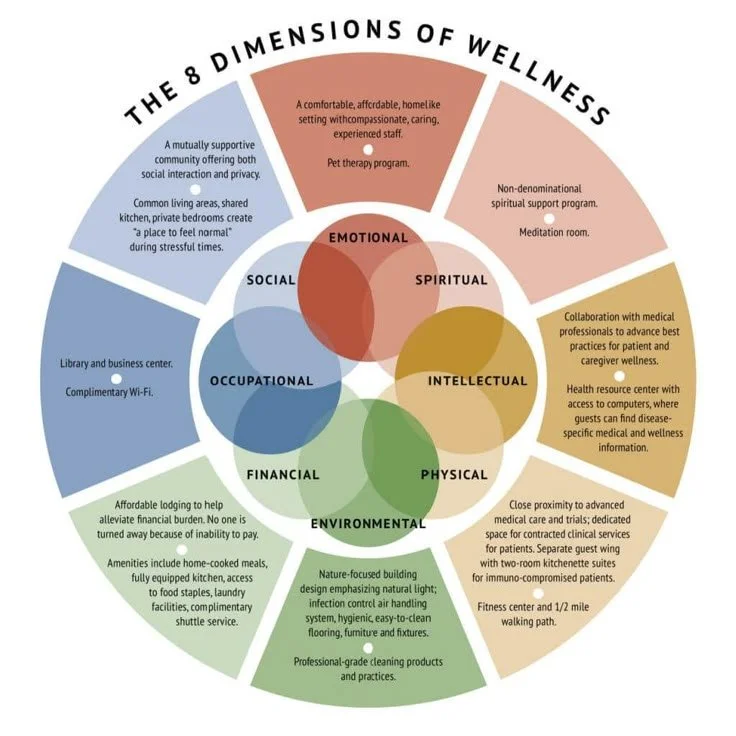
Career and contribution.
Financial health.
Mental and emotional wellbeing.
Physical health.
Relationships and community.
Home and lifestyle systems.
Leisure and pleasure.
Purpose and spiritual grounding.
To clarify, when I say relationship, I do not only mean romance.
I mean your relationship with your body.
Your work.
Your money.
Your home.
Your rest.
Your creativity.
Your community.
Your ambition.
Your grief.
Your joy.
Your purpose.
Your own voice.
Your own needs.
Your own becoming.
Over the next few posts, I want to unpack what I’m seeing more clearly now:
Why The Exit Strategy Network is a relationship experience ecosystem.
What a Creator-in-Residence actually does.
How dating apps expose a much larger relationship education gap.
Why protecting the blueprint is part of abandoning self-abandonment.
And how a proposal I created for a global brand became a roadmap for what I need to build myself.
For me, my educator-turned-founder path is about creating new systems, you know, “the village” after childhood. It’s about the practices, spaces, resources, and experiences that help us keep learning how to live.
Because maybe the question isn’t simply, “Why didn’t I learn this in school?” Maybe it’s “What do we need to build now so we can stop learning everything the hard way?”

Ms. Marisha is an Founder, Creator-In-Residence, and Storyteller building at the intersection of media, education, and regenerative ecosystem design.
Through The Exit Strategy Network, she is developing a relationship experience ecosystem that helps people build healthier relationships with themselves and the eight dimensions of life that shape wellbeing, work, wealth, creativity, connection, and belonging.
Her work explores Abandoning Self-Abandonment, Creator-in-Residence models, whole-life wealth, and new pathways for living, learning, loving, working, and leading beyond extraction.
